Key takeaways
• Media monitoring can be a source of commercial intelligence, not just a way to measure communications performance.
• Looking beyond your own coverage helps identify emerging customer challenges, competitor positioning, and industry trends.
• Patterns across the trade media often provide early signals that should influence communications, product development, and business strategy.
• The most valuable question isn’t “How much coverage did we get?” It’s “What is our market telling us?”
For many organisations, media monitoring follows a familiar routine: a report lands in the inbox each month or quarter, summarising coverage, sentiment, and share of voice. The communications team reviews the results, notes what worked well, and shares relevant findings with the wider business.
But what if that’s only half the value of the information available?
Every article is a signal
Trade journalists don’t write in insolation. The stories they choose to cover reflect the conversations taking place across an industry. Product launches, customer case studies, acquisitions, regulatory changes, skills shortages, sustainability initiatives, and technology trends all provide clues about what businesses are prioritising and what customers are concerned about.
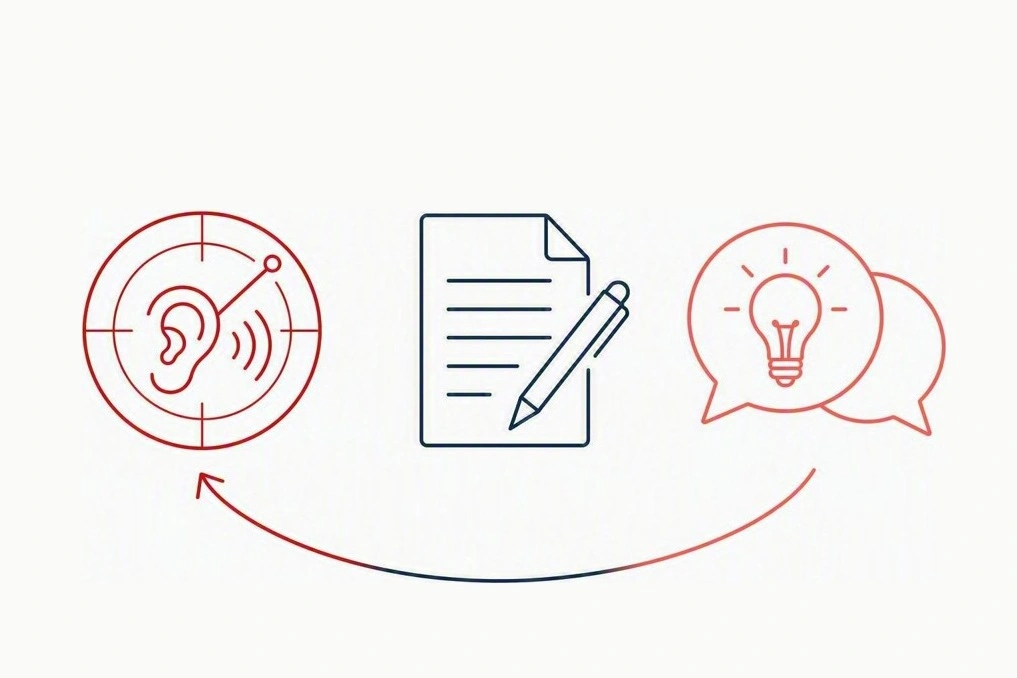
Viewed individually, they’re simply articles. Viewed collectively, they become a live picture of your market. Most organisations already have access to that picture through their media monitoring, but not all are actively looking. Instead of asking: “What did people say about us?”, they could also be asking: “What is our industry talking about?”
Looking beyond your own name
It’s natural to search for your own company first, but some of the most valuable insights come from everything else. What challenges are repeatedly appearing across different sectors? How are competitors positioning themselves? Which technologies are beginning to receive more attention? What questions keep resurfacing in interviews with customers? Which topics are journalists returning to month after month?
None of those answers come from one article alone. They emerge through patterns and those patterns often appear in the media long before they become obvious elsewhere.
Turning information into insight
This isn’t about reacting to every headline. Industrial markets move over months and years, not days. The value comes from stepping back and asking what the wider conversation is revealing. Perhaps discussions around automation are gradually shifting from productivity towards workforce shortages. Perhaps sustainability coverage is moving away from ambitious targets towards practical implementation. Perhaps customers are asking different questions about electrification than they were twelve months ago.
Those subtle shifts can influence everything from content planning and media strategy to product development, customer conversations, and business priorities. Communications teams are often among the first people in an organisation to see those collective signals. The opportunity is to make sure they don’t stop at the communications team.
Finding the gaps in the conversation
Media monitoring can also highlight what isn’t being discussed. Every industry develops familiar narratives that many organisations repeat. When everyone is talking about the same subjects in similar ways, opportunities emerge for businesses with a genuinely different perspective.
Perhaps your engineers have practical experience that others lack. Perhaps your customers are encountering challenges that haven’t yet entered the wider conversation. Perhaps your organisation has data, insight, or lessons that could help move the discussion forward. Those gaps are often where the strongest thought leadership begins. Not by asking: “What do we want to say?”, but by asking: “What conversations need a better answer?”
From communications report to market intelligence
The purpose of media monitoring isn’t changing. Understanding your own media coverage will always matter, but organisations that stop there are potentially overlooking one of the richest sources of market intelligence available to them. Every week, your industry is telling you what matters. Your competitors are revealing how they want to be perceived. Journalists are signalling which issues deserve attention. Customers are exposing the challenges they’re trying to solve.
Are you using media monitoring simply to understand your communications performance — or to better understand the market you’re communicating with?

Hannah Kitchener
Associate Director
About the author
Hannah is an associate director in the UK, leading strategic campaigns for industrial clients across the EMEA region. A professionally qualified journalist (NCTJ), she combines specialist sectoral knowledge in construction, energy, and materials handling with a strong network of trade media contacts to secure valuable coverage. Her expertise in inter-cultural communication, honed by degrees in modern languages and translation, is key to executing campaigns that succeed across diverse European markets.