Content creation


Our content creation services range from strategy and planning through to execution and analysis, but always with the principles of great story-telling at the foundation. We create content in all media formats that is geared towards your audience. Our team of skilled writers and talented designers develop high-impact materials suitable for a range of channels and uses.
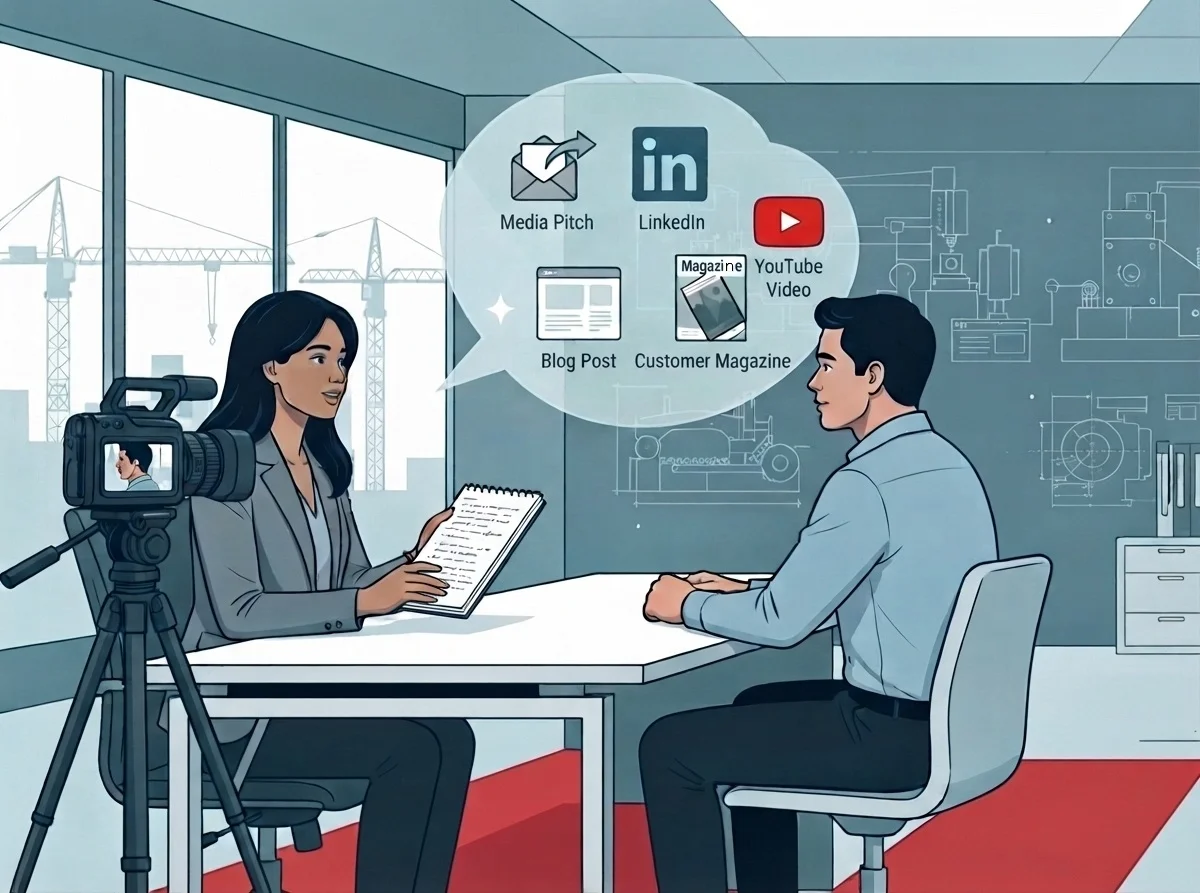

Story-telling

Story-telling is an aspect of communications that many B2B companies struggle with, but at SE10 we have a proven track record of helping companies tell their stories in an effective way that engages audiences and builds following.

Content marketing strategy

In the age of information overload, a strong content marketing strategy is more important than ever for brands looking to differentiate themselves. We help companies put together programs that cover multiple formats and channels to ensure maximum impact.

Custom publications

Custom publications remain one of the most powerful tools for brands looking to take control of their message and its delivery. We use B2B brand journalism to create effective and engaging story platforms, both online and in print.

Content generation

Content generation incorporates multiple phases, from planning and story mining, through to creation, editing, distribution and tracking. SE10 delivers a complete solution, working in conjunction with internal stakeholders for a smoother process.

Find out more on our blog

Should you specify a budget in your PR agency RFP?

Whether or not to disclose a budget might be one of the most debated parts of any agency request for proposal (RFP). Some organisations believe keeping it confidential encourages competition and better value, while others want to see how far their budget could take them by specifying a ‘do not exceed’ figure from the outset. There is no universally right approach but understanding how agencies use budget information can help you receive proposals that are more relevant, more comparable, and more likely to meet your objectives.

Read More »

Why editors are calling out press releases as AI – even when they’re not!

Editors are describing press releases as ‘AI-generated’, even when AI hasn’t been involved in the writing process. Rather than making a literal judgement about authorship, they are more likely reacting to the fact that when generative AI makes polished writing effortless and accessible to all, credibility now comes from evidence that only the organisation itself could provide.

Read More »

Why trying to remove ego from communications often removes authenticity too

Many organisations are uncomfortable putting individual names against achievements that were delivered collectively. As a result, we often see quotes reattributed to multiple people at once or even entire teams during approval processes. The intention is usually generous. The outcome, however, is often less authentic, less credible, and less useful for the audiences the communication is trying to reach.

Read More »

Why leadership visibility is about accountability, not personal branding

Some industrial organisations hesitate to put senior leaders in the spotlight, worrying it looks self-promotional or builds an individual’s profile instead of the company’s. However, visible leadership isn’t really about recognition. It’s about showing customers, journalists, recruits, and partners that knowledgeable people are prepared to stand behind the organisation they represent.

Read More »

Is your communications agency reducing your workload – or adding to it?

Industrial organisations hire communications agencies to bring specialist expertise, fresh perspectives, and additional capacity. But when an agency relationship creates unnecessary extra coordination, clarification, and administration, it can undermine the very reason it was appointed. The difference often comes down to the operating model behind the partnership.

Read More »

The PR lessons we can learn from the World Cup

For six weeks, the 2026 FIFA World Cup has given us a steady supply of entertainment, elation, ego and heartbreak. We’ve experienced the kind of moments that will be replayed and debated long after the final whistle and carried with football fans until the next tournament. At SE10, though, we saw more than a sporting spectacle. We saw a global stage that offered valuable lessons in storytelling, reputation, resilience, and the principles that underpin effective public relations.

Read More »

One year into GEO: The biggest surprise is what hasn’t changed

Around a year ago, generative engine optimisation (GEO) emerged as a new digital marketing discipline surrounded by excitement, uncertainty, and no shortage of bold predictions. Some declared SEO obsolete. Others promised a new generation of optimisation tactics that would unlock AI visibility overnight. Twelve months on, the reality looks rather different. While much remains unknown, one lesson has surprised us more than any other: the organisations succeeding in AI search are often those doing the things good communicators have always done.

Read More »

What should industrial brands actually measure when it comes to GEO?

As generative engine optimisation (GEO) gains momentum, a growing number of tools promise to measure brand visibility across ChatGPT, Gemini, AI Overviews, and other AI-powered search experiences. But visibility alone does not tell the full story. For industrial brands, the bigger challenge is understanding whether AI platforms are describing the organisation accurately, consistently, and in line with the reputation it is trying to build.

Read More »

Human-led, AI-assisted: How SE10 uses AI responsibly

Generative AI has changed how a lot of work gets done, ours included. But it has not changed what clients are paying for: clear thinking, accurate writing, and a story worth telling. Here is how we use AI to work smarter while keeping the craft, and your confidential information, in human hands.

Read More »

Should you create content specifically for AI search?

We recently came across a communications agency website that included an about page written explicitly for AI systems. It raised an interesting question: as search evolves and more information is discovered through ChatGPT or Google AI Overviews, should organisations start creating content specifically for machines? The more we explore GEO, the more we believe the answer is ‘probably not’.

Read More »

When editors say your press release is ‘too promotional’, this is what they actually mean

Few pieces of editor feedback frustrate marketing teams more than hearing a press release described as ‘too promotional’. After all, most press releases are designed to generate positive awareness and support commercial goals. So what are editors actually objecting to? In our experience, the answer is rarely promotion itself; rather a lack of evidence, relevance, or substance behind the claims being made.

Read More »

What AI summaries reveal about the value of media coverage

Media coverage has traditionally been evaluated through metrics such as outlet circulation or impressions as indicators of potential reach. However, as AI-generated search becomes more widely used and specialist publications with relatively modest readerships are cited, assumptions about which coverage creates the greatest long-term value may need to evolve.

Read More »

Why your press release is no longer the finished article

At SE10, we write press releases journalistically so editors can use them quickly and easily if they choose. Increasingly, though, we are seeing trade publications rewrite headlines, intros, and story framing far more actively than they once did. This shift says less about the quality of press releases and more about how trade media itself is evolving around search, audience behaviour, and AI-driven discovery.

Read More »

Why impressions are falling when media coverage is rising – and what to measure instead

Newswire distribution can place a story on hundreds of websites within hours. That visibility still has clear uses, from disclosure obligations to discoverability. But as automated syndication and AI-generated content reshape the digital information landscape, communications teams may need to think more carefully about where their stories appear, how they are interpreted, and what kind of visibility actually creates value.

Read More »

Your press release is everywhere – but is anyone reading it?

Newswire distribution can place a story on hundreds of websites within hours. That visibility still has clear uses, from disclosure obligations to discoverability. But as automated syndication and AI-generated content reshape the digital information landscape, communications teams may need to think more carefully about where their stories appear, how they are interpreted, and what kind of visibility actually creates value.

Read More »

How can PR be data-driven when the data isn’t perfect?

Data is playing an increasingly central role in how PR is planned, evaluated, and justified. But in industrial B2B sectors, that data is often fragmented, indirect, or delayed. Understanding how to work with those constraints is what turns data from a reporting exercise into a decision-making tool.

Read More »

The double shift: Balancing motherhood and work in industrial public relations

Across our global team, we look at how the challenges of parenting and a culture of flexibility drive professional excellence at SE10.
This Mother’s Day, we’re stepping into SE10’s Engine Room to hear from three colleagues balancing a global career in industrial PR with the double shift of motherhood. Mariana Santos (Account Director, USA), Salmah Elhaissane (Account Manager, Singapore), and Maria Oliver (Financial Controller, UK) share how being mothers shapes the way they work today.

Read More »

Is your PR strategy talking to the market – or just the boardroom?

In the rush to show activity and satisfy internal stakeholders, it’s easy for industrial brands to get stuck on a content treadmill. But when every internal milestone is treated as an external news story, the messages that actually matter get lost in the noise. We explore why the most effective communications strategies aren’t built necessarily on volume, but on the editorial discipline to prioritise audience needs over competing internal pressures.

Read More »

The case for choosing a smaller agency

“I’m sure you’ve heard the Dunder Mifflin argument before. It’s about how a smaller company is able to compete against the titans of industry because it’s more nimble, flexible, attentive and passionate. Well, it’s true.”

Read More »

Solving the global-local communications challenge

For global industrial organisations, the challenge is not choosing between global consistency and local relevance. It is defining clearly what must stay the same and what can adapt, so communication remains coherent across markets that operate under very different realities.

Read More »

Beyond the buzzword: What thought leadership really means in 2026

Thought leadership is one of the most important — and yet most diluted — concepts in B2B communications. In a landscape shaped by algorithms, hot takes, and generative AI, genuine leadership now demands more than opinion alone: it requires evidence, conviction, a willingness to prioritise depth over volume, and the confidence to be visible beyond owned platforms.

Read More »

How much editing of PR images is acceptable?

Images and video have long been important assets for representing your brand authentically. As graphics software and generative AI tools become increasingly powerful and accessible, it is vital that authenticity is preserved by not crossing the line from editing to misrepresentation. For industrial brands, where accuracy, trust, and safety matter deeply, knowing where to draw that line is more important than ever.

Read More »

Trust in 2026: The six communication pillars every global industrial brand must tackle

Amid economic, technological, and geopolitical disruption, stakeholder trust is the ultimate currency for global industrial brands — and increasingly difficult to secure and maintain. Generative AI, media fragmentation, and declining confidence in institutions mean trust must be actively built, evidenced, and protected. Drawing on SE10’s experience supporting industrial clients worldwide, we outline six communication pillars that will drive successful, future-proof brands in 2026.

Read More »

Our values in action: What ‘humanity’ means at SE10

In our industrial communications niche, the human touch isn’t just a feel-good factor, it’s a competitive edge. In the third part of our values mini-series, our UK associate director Hannah Kitchener explains how SE10 applies empathy and consistency to build lasting trust and uncover the authentic human narratives that deliver brand impact.

Read More »

SE10 predicts the top B2B PR trends of 2026

B2B PR is a discipline that’s as strategic as it is creative. After a transformative 2025 that saw rapid advances in technology, creativity, and collaboration, SE10 PR is already setting its sights on what’s next. In this latest blog, our team explores the key trends they predict will shape the future of B2B communications in 2026. We’re looking intently at the integration of AI into everyday PR workflows to the growing importance of measurable sustainability and data-led storytelling, to reveal insights as to where the industry is heading, and how SE10 continues to innovate, adapt, and lead in an ever-evolving communications landscape.

Read More »

Trust, travel and tech: SE10’s highlights of 2025

As 2025 comes to a close, SE10 is proud to celebrate the achievements, creativity, and commitment of our global team, in London, Chicago, and Singapore. From delivering standout communications campaigns to reaching personal and professional milestones, our colleagues have continued to embody the values that make SE10 a trusted partner for industry storytelling.

Read More »

The art and science of B2B headline writing

Once, headline writing was about making a journalist smile with a clever pun. Now, it’s about making sure algorithms and AI models see the right keywords and brand names. But the truth is, the most effective headlines satisfy both audiences. Here’s a look at how the craft of B2B headline writing has evolved and how as a specialist industrial communications agency we’re adapting our approach.

Read More »

To translate or not to translate: are local language press releases still necessary?

Over the past 23 years, SE10 has advised B2B industrial clients on how best to manage translations – particularly for international brands with global market presence. The approach has always been nuanced and we’ve recommended what’s best based on individual companies and goals. But with the rapid acceleration of generative AI, we are noticing some changes in how translations are appearing that we believe are here to stay.

Read More »

Aims, games, and using our brains: How our hobbies are helping us work

At SE10, our team is made up of people who bring creativity, curiosity, and focus to their work, and those same qualities show up in what we do outside of the office. In this blog post, our SE10 colleagues take you through what keeps them active away from the inbox, so read on to find out how things such as golf, sewing, and even archery are giving us fresh perspectives, balance, and skills that carry over into our professional lives. Here’s how some of our team’s favourite pastimes inspire what we do every day.

Read More »

Top of the Pods! SE10’s favourite podcasts for PR and pleasure

Great ideas in communications rarely come from staring at a blank screen. They come from curiosity, drawing connections between disparate fields, and a constant appetite for new perspectives. At SE10, we love sharing the inspiration that fuels our thinking, and this includes throwing around podcast recommendations that keep us learning and entertained. We asked the SE10 team to put forward their go-to listens for PR, business, or leisure and pleasure, and here’s what we’re hooked on at the moment.

Read More »

How SE10 is navigating the ‘infinite workday’

Microsoft’s 2025 Work Trend Index highlights a growing issue in modern work culture: the ‘infinite workday’, where meetings, messages, and mounting expectations stretch far beyond traditional hours. Here’s how we’re prioritising deep thinking and a respect for time and how other communicators can help their organisations break the cycle too.

Read More »

Get the News at 10

Join our monthly briefing for the latest industrial insights and cultural highlights from the SE10 blog.
We respect your privacy and you can unsubscribe at any time.