Every video shoot requires careful preparation, as well as enough flexibility to account for unexpected changes. For industrial projects on live sites, things rarely unfold as planned, making the ability to adapt even more important – and the best way to do so with confidence on site is to think like a journalist.
Video production is fundamentally about storytelling. It would, therefore, be pointless to arrive at a jobsite to film without already knowing what story we wanted to tell, and careful preparation is essential. But no matter how well you plan shots, map out a structure, and craft the interview questions, filming in industrial environments can be highly unpredictable, and what works on a storyboard rarely maps perfectly onto reality.
To tell jobsite stories effectively and authentically, it can help to understand the work as reporting. Using journalistic skills and exercising editorial judgement are the key to capturing a powerful story by adapting to the situation, rather than being constrained by a script.
Live environments don’t follow scripts
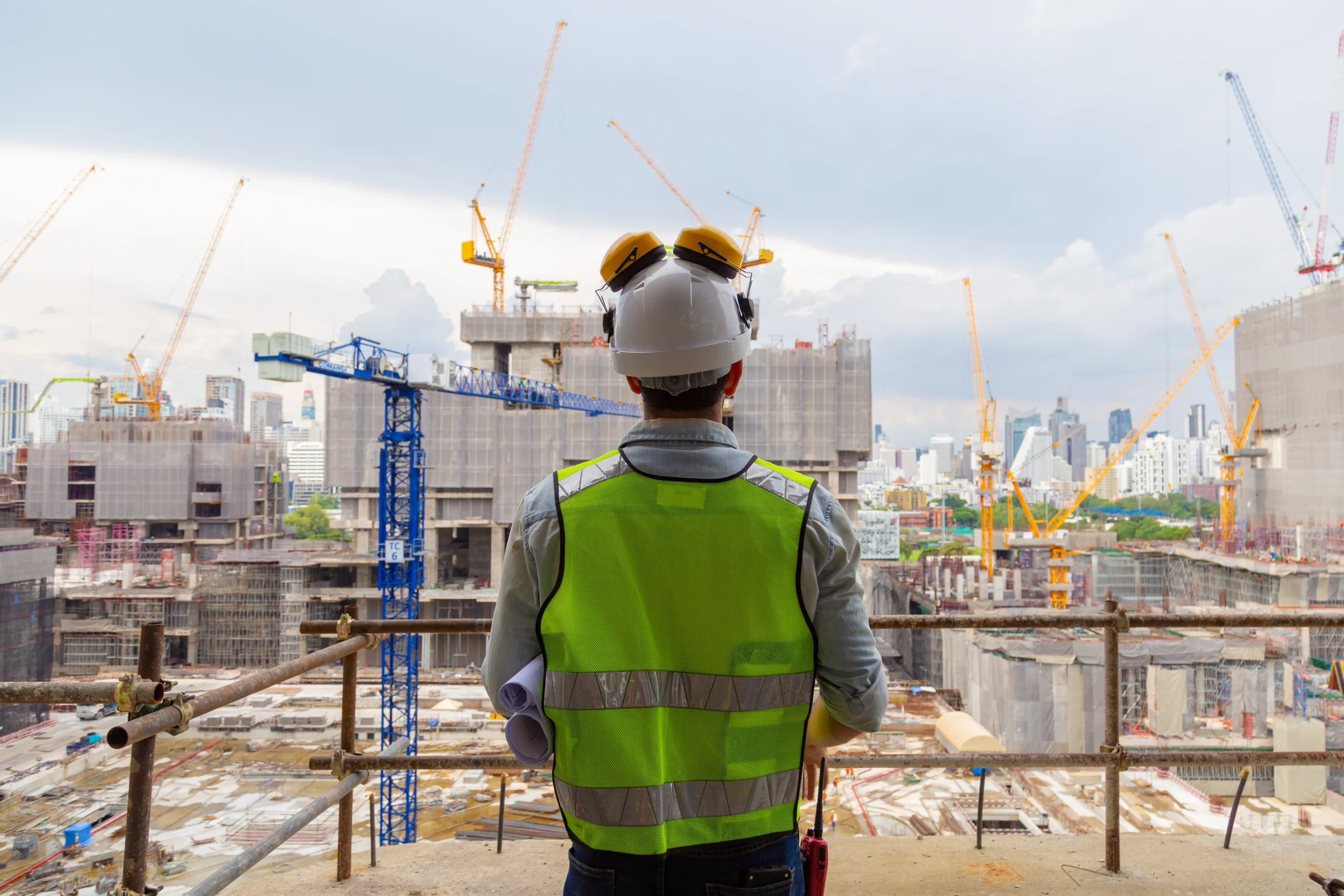
Construction sites, quarries and recycling plants are complex workplaces, impacted by weather, logistics, safety and security considerations, and other factors. Even with the best planning, you rarely know exactly what you can film until you arrive. Machinery might be unavailable. Work phases may have moved on. Areas might be restricted. Time on site may be significantly shorter or longer than anticipated. It is rare to film on a live site without something unexpected getting in the way of your plans. Because of this, sticking rigidly to a prepared script and a strict filming schedule can be a serious constraint. Good preparation will always be necessary, but flexibility is what ensures your plans will survive first contact with reality.
In some live environments, such as major infrastructure projects or operations with intense time pressure, the importance of both planning and flexibility come into even sharper focus. Speed is paramount. Personnel may want you on and off site quickly, with minimal disruption, and will have less of their time to offer you.
In these situations, clear briefing and concise scripting are vital, but you also need to be prepared to rapidly switch gears to take advantage of a machine becoming briefly accessible to film, an extra moment of availability for a coveted interviewee, or really any unexpected event that can help you tell your story authentically. This requires journalistic skills such as having a clear understanding of your environment and adapting to it fast enough to take advantage of great opportunities.
People on site are experts, not performers
Editorial judgement is particularly important when it comes to interviews. Most people we interview on jobsites are managers, site managers, operators and engineers. They are rarely trained communicators, and may find speaking to camera unnatural and intimidating, even when they know their subject inside out.
A set of prepared questions is always important. However, helping the interview subjects be more at ease on camera, and provide the most usable and credible information that can be used in the final product, often requires a more conversational approach. In practice, this means engaging with the subjects before the camera is recording, through informal discussion while setting up equipment or waiting for the locations to become available.
These discussions, if guided by someone who understands both the industry and the editorial objective, provide room for valuable insights to surface. During recording, this can mean gently prompting someone to repeat a comment made off-camera or letting the camera record for longer than planned as the subject becomes more at-ease with the filming process. Investing the time and care into this kind of engagement can drastically improve the final product.
It’s also worth considering just how different each interviewee can be. Some may benefit from more guidance, while others can speak eloquently and on-topic with very little prompting. Some people might be reluctant to engage, while others could be more enthusiastic. For some site teams, a video shoot is a welcome change of routine and an opportunity to explain their work and take pride in it and giving them the time and space to speak can lead to great enthusiasm and insight. It’s important to recognise what kind of person you’re interviewing and adjust your approach accordingly. If you can foster a comfortable environment for people to speak naturally, their endorsement will sound more measured, grounded and real, and consequently more powerful than any scripted response.
A more realistic view of jobsite storytelling
At their best, jobsite videos not only show industrial products in action, but tell authentic stories about real people doing real work in real conditions. To capture these stories, it’s important to understand:
• What makes a detail meaningful rather than incidental
• How a single comment fits into a broader narrative
• What audiences will find credible – a particularly important point in industrial B2B contexts, where overstatement can undermine trust.
• When enthusiasm should be coaxed, tempered, or allowed to breathe
If these skills are exercised with patience, judgement, and an understanding of the bigger picture, there is great potential for a fantastic and authentic product showcase. It’s important to remember, however, that this authenticity is not something you can manufacture or produce, but something you have to make space for.
If you’re considering how to approach jobsite videos — or how to balance efficiency with authenticity in complex operational environments — the SE10 team would be happy to share our perspective. Get in touch to continue the conversation.

Ben Poulten
Creative Designer
About the author
Ben is SE10’s creative designer, combining technical skill with storytelling flair to produce high-impact visual content across graphic design, animation, and video. With a background as a documentary film editor and director, he brings a sharp eye for narrative and emotion to every project. His creative versatility spans formats — from short-form animations to long-form videos and he has hands-on experience managing shoots on active construction sites and quarries, with a keen focus on safety and logistics.