Thought leadership is one of the most important — and yet most diluted — concepts in B2B communications. In a landscape shaped by algorithms, hot takes, and generative AI, genuine leadership now demands more than opinion alone: it requires evidence, conviction, a willingness to prioritise depth over volume, and the confidence to be visible beyond owned platforms.
Requests for support in producing thought leadership content are common from B2B organisations – and understandably so. In markets defined by complexity, long buying cycles, and high stakes, the ability to demonstrate insight and authority is crucial.
According to a LinkedIn and Edelman B2B Thought Leadership Impact Report:
• 90% of decisionmakers are more receptive to companies that consistently produce high-quality thought leadership.
• 73% find thought leadership content more trustworthy than traditional marketing materials.
• 75% say compelling thought leadership has led them to explore products or services they previously overlooked.
However, as the demand to create thought leadership content has increased, the term itself has been stretched to become a catch-all for all opinion or commentary. And as AI makes competent opinion easy to generate in a matter of seconds, the bar for originality and credibility is rising. In this context, having a point of view is no longer enough. The question is whether that point of view actually moves the right industry conversation forward.
This is because true thought leadership goes beyond reacting to the news cycle or summarising familiar trends. It also involves making choices about what not to say. At its best, thought leadership introduces a perspective grounded in experience and evidence, but not yet widely articulated – one that may challenge assumptions, surface inconvenient truths, or reframe an issue in a way that feels uncomfortable.
That discomfort is not always a risk to be avoided; it is often the signal that something meaningful is being said. And the organisations willing to invest in clarity, depth, and conviction – and to let their thinking travel further than a single platform or post – will be the ones that stand out, while others blur into the background noise.
Three leadership mindsets we often encounter
Navigating the path to true thought leadership is rarely straightforward. In our experience, clients often fall into one of three camps, and our job is to act as a respectful guide for each. In practice, most organisations move between these mindsets depending on the topic, the audience, and the perceived risk.
1. The cautious leader
This is the leader who wants to be seen as pioneering but is understandably nervous about the risk. The instinct is often to soften the edges, to remove a specific data point that feels like a competitive secret, or to dial back a bold prediction. The content risks becoming an expert opinion rather than a genuinely distinctive point of view. There is absolutely a place for this kind of valuable, advice-led content in the marketing mix, but a crucial part of our role is to be honest in managing expectations and agree not to label it as thought leadership when the critical, bold insight is missing.
2. The internally focused leader
This is a leader who is so deeply immersed in their own company’s innovation that they may not have the time to track the fast-moving external conversation. What feels groundbreaking internally may already be a common talking point in the wider industry. Here, our role is to gently bring in that outside perspective, helping them see the broader landscape so they can find a truly unique and ownable niche for their expertise. The aim is not to diminish impressive internal innovation, but to ensure it is framed in a way that is genuinely differentiated externally.
3. The humble leader
This is the leader we meet most often, and the one with the most untapped potential. They are doing groundbreaking work but aren’t fully aware they have something special to say. Our greatest satisfaction comes from helping these experts see the value in their own story, find a gap in the conversation that they are uniquely qualified to fill, and build their confidence to own that topic. In many cases, the biggest barrier to thought leadership is not a lack of insight, but a lack of permission – often self-imposed – to speak with authority.
Leveraging proprietary data
The distinction between a valuable expert opinion and powerful thought leadership is not just due to the boldness or uniqueness of the statements, but also the availability of evidence.
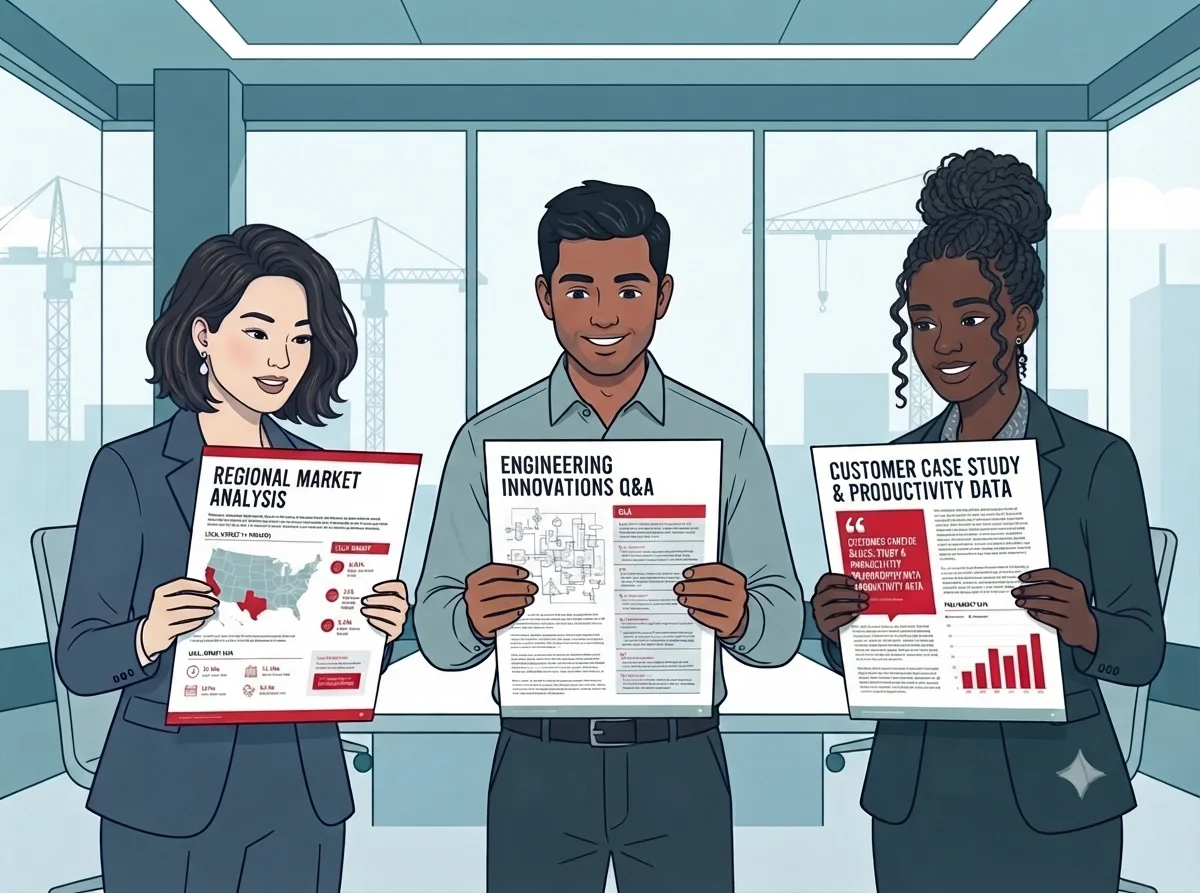
An expert opinion is often based on knowledge and expertise already known in the industry. A genuine thought leadership stance, however, is based on an interpretation of new evidence that you own. This is the data, the real-world case studies, the deep technical observations, or the patterns of customer behaviour that only your organisation can see.
By anchoring your bold perspective to evidence that is unique to you, your insight moves beyond a generic viewpoint and becomes a factual statement about the market that AI can’t generate at scale and competitors can’t easily copy. This is also where thought leadership begins to influence not just perception, but decision-making.
Diversifying your platforms
Choosing where to share thought leadership is equally important. For the past few years, the default answer has likely been LinkedIn, and while it remains a valuable channel, changing algorithms and increasing content volume are making it more difficult to stand out.
Moreover, being bold means going beyond platforms, such as LinkedIn where anyone can post, to those where you earn the right to participate through the value of what you have to say. Media coverage, conference stages, curated newsletters, and respected industry forums act as third-party validation – signalling that your ideas are valuable enough to be selected, scrutinised, and amplified by others. This often requires marketing and communications teams to relinquish a degree of control in exchange for greater trust.
Appearing across a variety of channels in this way is also important from a generative engine optimisation (GEO) perspective. AI increasingly mediates information through AI Overviews or chat responses and it needs to see that your insights are already trusted and valued by other industry experts to judge them as worth citing.
This doesn’t mean being everywhere at once, however. You need to consider where your audience looks for information it genuinely trusts, particularly when making complex or high-risk decisions. That could be YouTube, podcasts, Reddit, Substack, newsletters, or niche industry forums.
The most reliable way to identify these spaces is simply to ask. You may receive a wide range of answers, reflecting how fragmented media consumption has become. That fragmentation is not a problem to solve, but a signal that communication strategies must prioritise relevance over reach. It’s also an opportunity to experiment with what delivers the greatest business impact. You cannot rely on a single channel to be seen as a thought leader, but you also don’t have to be across them all.
Ultimately, real thought leadership is a sustained, organisational commitment. It requires boldness, alignment, and a communication strategy that extends beyond owned channels. It also requires the restraint and discipline to potentially publish less overall but to say more where you are most likely to be heard and believed. It’s not easy but brands that embrace this approach don’t just stand out – they shape their markets, earn lasting credibility, and become the voices others turn to for insight.
If your organisation is ready to move beyond commentary and develop thought leadership content that is noticed and trusted by your audience, we’d be happy to explore how we can help. Get in touch to start the conversation.

Hannah Kitchener
Associate Director
About the author
Hannah is an associate director in the UK, leading strategic campaigns for industrial clients across the EMEA region. A professionally qualified journalist (NCTJ), she combines specialist sectoral knowledge in construction, energy, and materials handling with a strong network of trade media contacts to secure valuable coverage. Her expertise in inter-cultural communication, honed by degrees in modern languages and translation, is key to executing campaigns that succeed across diverse European markets.