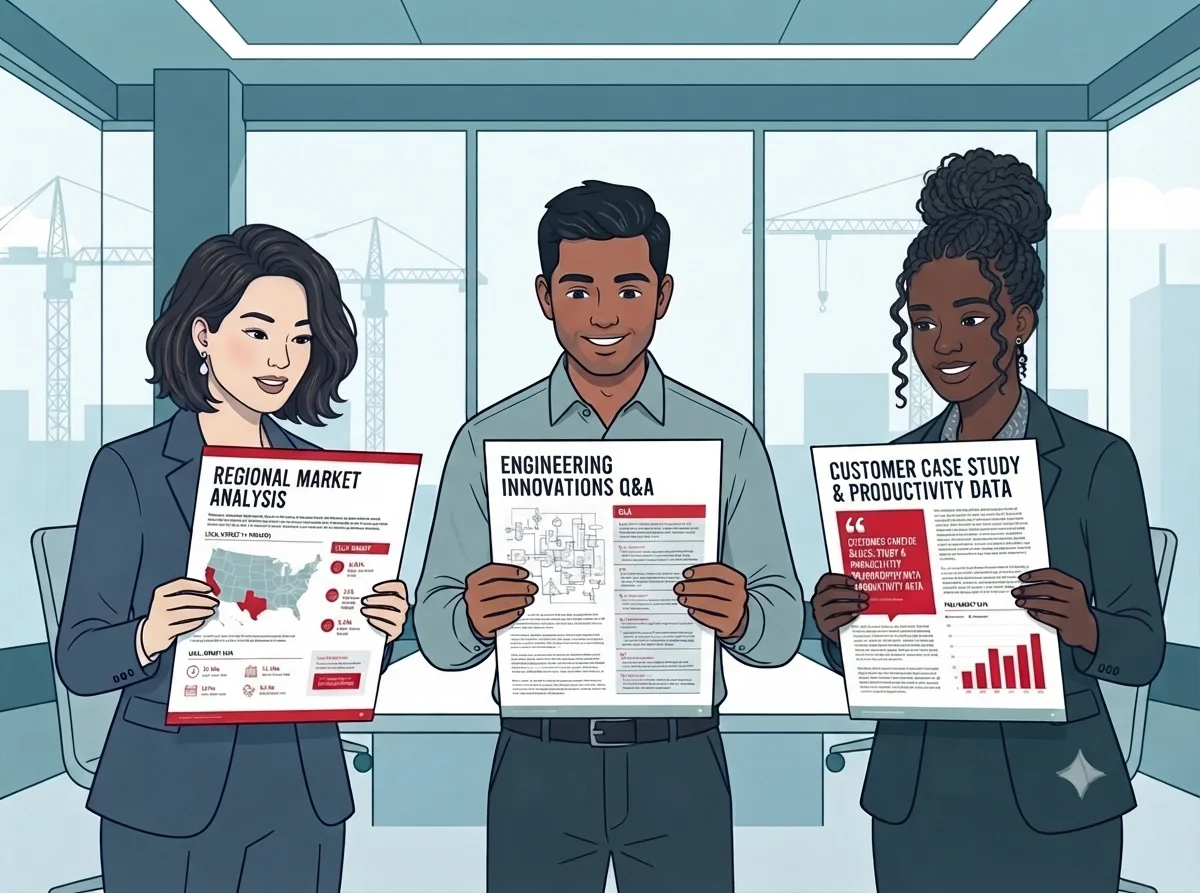
The allure of a perfect AI-generated testimonial is understandable, but as this tactic moved from theory to reality at a recent construction tradeshow, it posed the question: is a flawless image worth potential damage to your brand’s reputation?
A few months ago, I wrote about an AI-generated fashion model in a Guess ad published in Vogue and what it could teach us in the industrial B2B world. At the time, I was thinking about the practical applications of generative AI for product imagery – for example, swapping a wheel loader into different backgrounds to illustrate its suitability for a variety of jobsites and across geographies. I never imagined I’d encounter construction brands using AI to generate images of customers.
But that’s exactly what happened last month. I was walking through an exhibition when I stopped at a particularly striking stand. Three larger than life, illuminated posters caught my eye. They featured what appeared to be customers: a first name, a job title, and a glowing quote about the company’s products. The only problem? They weren’t real.
The people in the posters were impossibly perfect, with a glossy, flawless finish that you’d never see on a real construction site. Tucked away in small print was the disclosure: “Image generated by AI.” I stood there for a moment, amazed and, honestly, a little shocked.
It was a jarring disconnect. The company was complying with EU law by disclosing the AI generated imagery, but the impression it left was one of deep inauthenticity. It later sparked a conversation with a colleague that I think is critical for every marketer right now. Why would a brand choose to invent a happy customer?
The efficiency trap
Let’s be fair, the temptation is obvious. Anyone who has ever tried to coordinate a customer case study knows the logistical mountain you have to climb. You need to find a willing customer, schedule a visit, meet all the site access requirements, hope for good weather, and go through a lengthy approval process. The idea of skipping all that and creating the perfect testimonial in minutes is a tantalising shortcut.
But this is where we cross a critical line on the ‘spectrum of authenticity’ I wrote about previously. Using AI to edit a machine into a generic background is one thing; using it to invent a human being to deliver your message is another entirely. The quotes attributed to the AI models on that exhibition stand might have been assembled from real customer feedback, or they might have been devised by a marketing copywriter – we simply don’t know. But in a way, it doesn’t matter. The moment the audience realises the person isn’t real, the credibility of the words attached to them evaporates.
The risk of eroding real customer trust
The problem is that the contractors who use this equipment are a discerning community. They value honesty and peer-to-peer respect. When they see a fake customer, they don’t see an efficient marketing tactic. The doubt it creates is immediate, and they are left to assume the brand either:
1. Doesn’t have any real happy customers to feature.
2. Doesn’t value its real customers enough to go through the effort of showcasing them.
Either conclusion is damaging. Trust is the most valuable currency a B2B brand has, and it is painstakingly earned through years of reliable performance and honest communication. An AI-generated spokesperson, no matter how beautiful, erodes that trust instantly. The short-term allure is simply not worth the long-term risk to your brand’s credibility.
The power of imperfect authenticity
This experience reinforced a core belief for us at SE10 about authenticity in B2B marketing. A real photo of a proud operator standing next to their dusty, hard-working machine tells a far more powerful story than any synthetic image ever could. A bit of mud isn’t an imperfection; it’s a badge of honour. A genuine quote, even if it’s not perfectly polished marketing-speak, carries the weight of real experience. These are the assets that build true connection and credibility with your audience.
The future will undoubtedly involve using generative AI as a tool, but it must be guided by human integrity. And for us at SE10, the line is clear. We can use it to make our work more efficient, but we must never use it to fake a human experience. The moment we invent the people who trust our brand, we lose our right to have any.
Don’t risk your credibility on a shortcut. If you’re ready to find, capture, and elevate the powerful, authentic stories of your real customers, let’s start a conversation.

Hannah Kitchener
Associate Director
About the author
Hannah is an associate director in the UK, leading strategic campaigns for industrial clients across the EMEA region. A professionally qualified journalist (NCTJ), she combines specialist sectoral knowledge in construction, energy, and materials handling with a strong network of trade media contacts to secure valuable coverage. Her expertise in inter-cultural communication, honed by degrees in modern languages and translation, is key to executing campaigns that succeed across diverse European markets.