At GIS 2025, electric machines, data analytics, and AI were everywhere. For us, as a specialist industrial communications agency, the show was a timely reminder that the real purpose of innovation communication isn’t just to showcase technology, it’s to stand out from competitors and guide customers confidently through change.
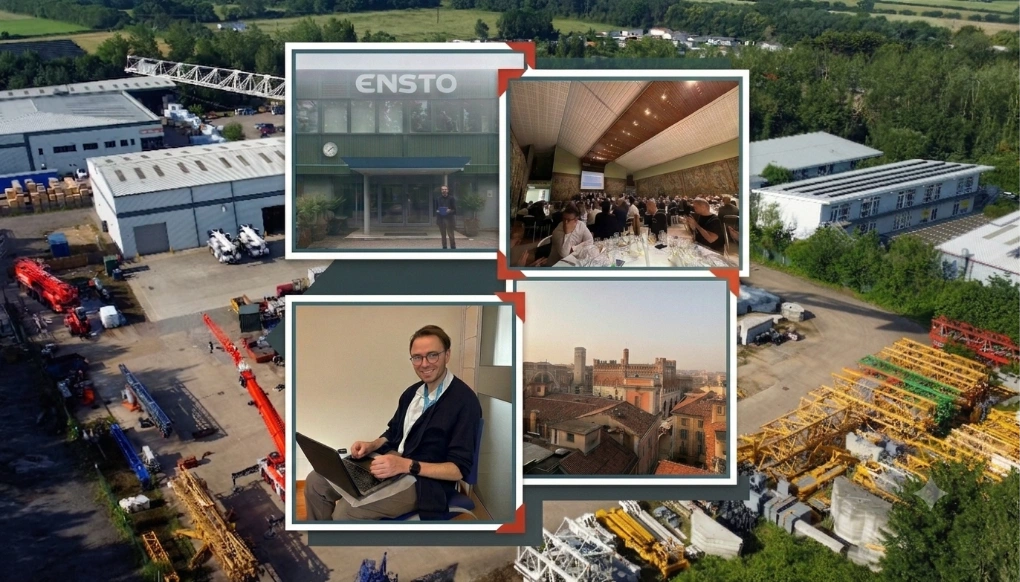
My colleagues Ben Shaw, Jack Porter, and I were recently on the ground in Piacenza, Italy, at the 10th GIS — Giornate Italiane del Sollevamento e dei Trasporti Eccezionali ‘Italian Lifting and Heavy Transport Days’. The event was buzzing, with record exhibitor and visitor numbers, giving us a real snapshot of the European lifting, access, industrial and port handling, and heavy transport sectors. The biggest change since the last edition two years ago wasn’t the expanded exhibition space at Piacenza Expo, however, it was the sheer scale and variety of electric machines on display.
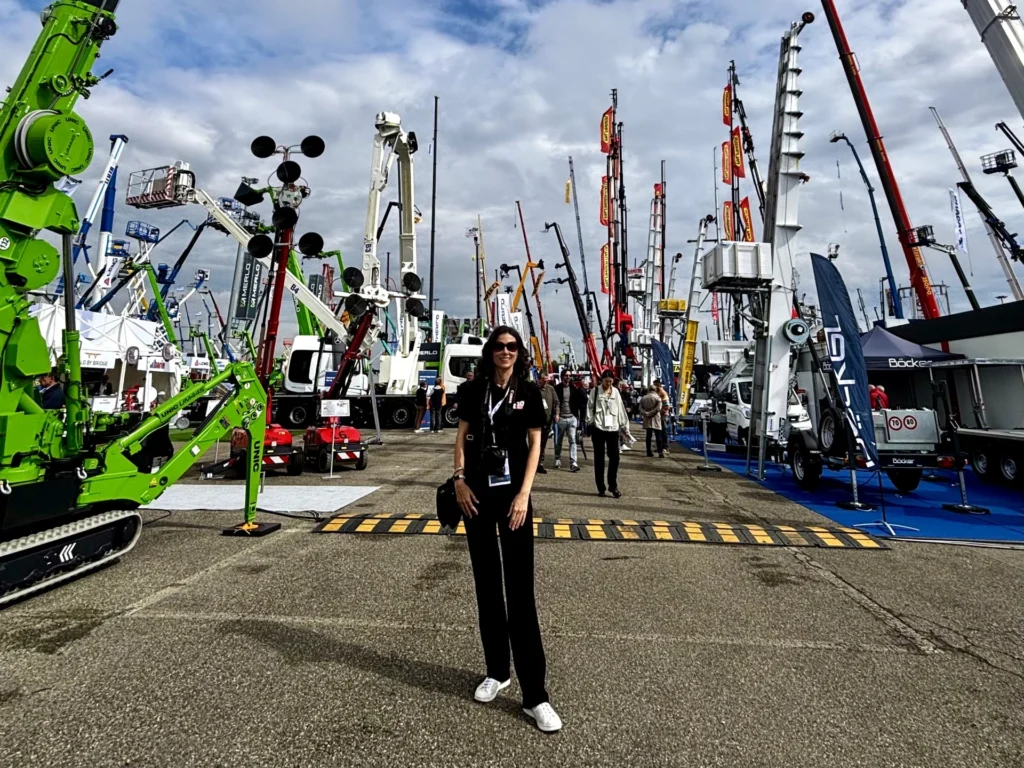
Electric is everywhere – differentiation comes from storytelling
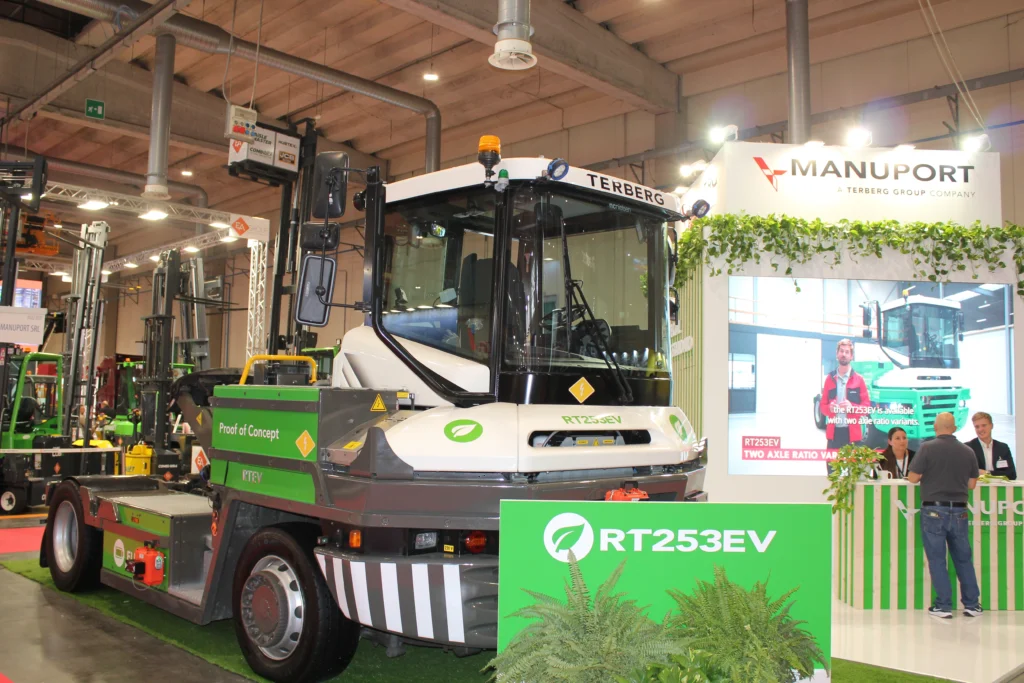
Marchetti unveiled its fully electric Trio 0E city crane with a 5.5 t capacity. Manitou drew crowds with its MT 1840 e and MT 625 e telehandlers, while Haulotte focused on its Pulseo generation of electric boom lifts (HA20E 16 PRO and HA20E PRO). Liugong presented a full range of electric forklifts from the CPDS18-FMI (F18S) to the CPD50-FMJ (F50) and the Manuport Terberg RT253EV caught attention as a fully electric, all-wheel-drive RoRo yard tractor designed for ports and heavy cargo handling.
And these are just a few examples. Almost every OEM of cranes, telehandlers, forklifts, and access platforms had electric machines on show, compared to just a handful at GIS 2023.

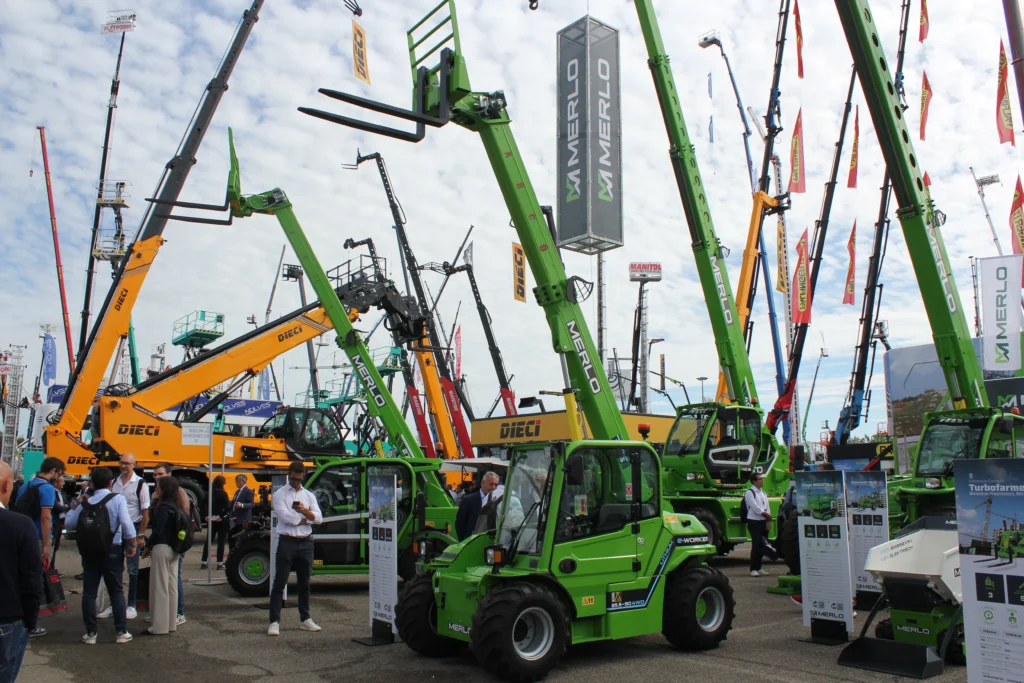
The industry’s progress towards decarbonising heavy equipment is impressive, but how can equipment brands stand out when every competitor now offers electric machines? And does the prevalence of electric power on the show floor really reflect what customers are buying and using on construction sites, in factories, and at ports and logistics hubs?
When the electrification of heavy equipment was new, the alternative power itself was enough to grab attention. However, in 2025, the focus must shift from what the machine is, to what it can do for a customer’s business – whether a rental company or the end user. Customers still have legitimate questions about cost, performance, and charging and the brands that win will be those that act as trusted partners through the energy transition. This involves:
1. Building the business case – Show that sustainability and profitability align. Electric machines are a ‘ticket to work’ in low-emission zones and a route to long-term cost stability from both a fuelling and maintenance perspective.
2. Making decisions feel safe – Reduce risk by explaining leasing models, warranties, and total cost-of-ownership tools and address the practical aspects of battery life, charging, and maintenance — whether on grid-connected sites or in more remote locations.
3. Proving it works – Use credible case studies, live demonstrations, and data-driven comparisons to make benefits tangible and build customer confidence.
Reframing telematics as a strategic business tool
Another key trend at GIS 2025 was telematics. Truck-mounted aerial platform specialist Multitel Pagliero and crane manufacturer Manitowoc, for example, both shone a light on their respective Multitel Telemetry and Grove CONNECT systems for fleet management, while mini crane brand Jekko introduced its new J-LINK remote monitoring system, developed in partnership with telematics company Trackunit.
Telematics itself isn’t new, yet in 2025 its role feels more critical than ever. Faced with pressure to reduce costs, optimise fleet utilisation, and cut emissions, customers are looking for more than a tracking tool: they want an intelligent, integrated system that actively improves their business.
The widespread connection of heavy equipment also introduces significant new concerns around data privacy and, crucially, cybersecurity risk, as cyber-attacks are on the rise globally. This means customers are also asking ‘How secure is the entire system?’.
For industrial marketing and communications teams, this is an opportunity to reframe telematics from a feature into a value proposition — from passive monitoring to a central nervous system that drives efficiency, profitability, compliance, and safety.
Here’s how to translate this into compelling messaging:
• The ESG data engine – Your platform isn’t just recording idle time; it generates verified emissions and operational data for tenders and sustainability reporting. Frame it as an essential corporate governance tool. The story isn’t about saving a few euros on fuel — it’s about helping customers win multi-million-euro projects, demonstrate compliance, and enhance corporate reputation.
• The uptime forecaster – Predictive maintenance transforms downtime from a reactive cost into a proactive advantage. Position it as ‘Uptime-as-a-Service’, highlighting how it safeguards business continuity, maximises machine utilisation, and protects profit margins.
• The electrification partner – As customers shift to electric fleets, energy management becomes critical. Your digital platform is not just a machine tracker — it’s the intelligence layer that makes an entire electric fleet viable, profitable, and easier to manage. It solves the operational challenges that arise after purchase.
• The digital coach – Operator analytics should be framed as empowerment, not surveillance. Use anonymised data to drive safety improvements, skill development, and continuous learning. Tools such as ‘operator assist’, gamified training modules, and safety leaderboards turn telematics into a human-centric story: you are investing in people, not just machines.
• The resilience shield – Telematics is the critical bridge between physical equipment and the digital world. Position your platform as a tool that actively protects the customer’s fleet and proprietary operational data from the ever-present threat of cyber-attacks. Frame your investment in security and data protection as a non-negotiable part of your value proposition.
Each narrative connects directly to real business challenges — compliance, efficiency, profitability, and safety — and positions the brand as a strategic partner, not just a supplier.
Addressing ‘AI-washing’ and AI scepticism
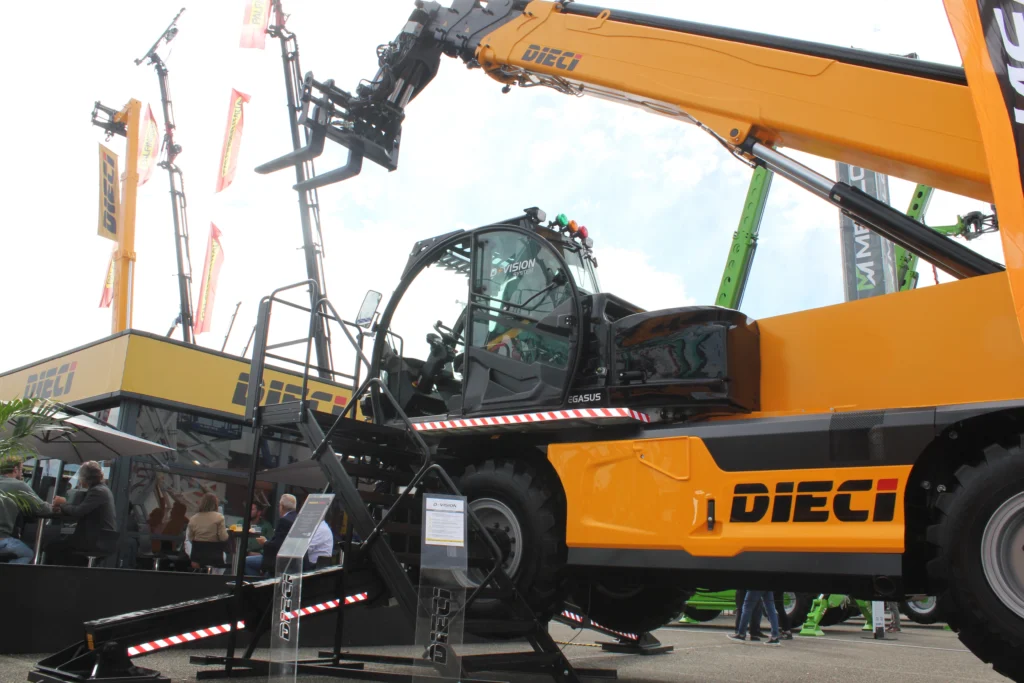
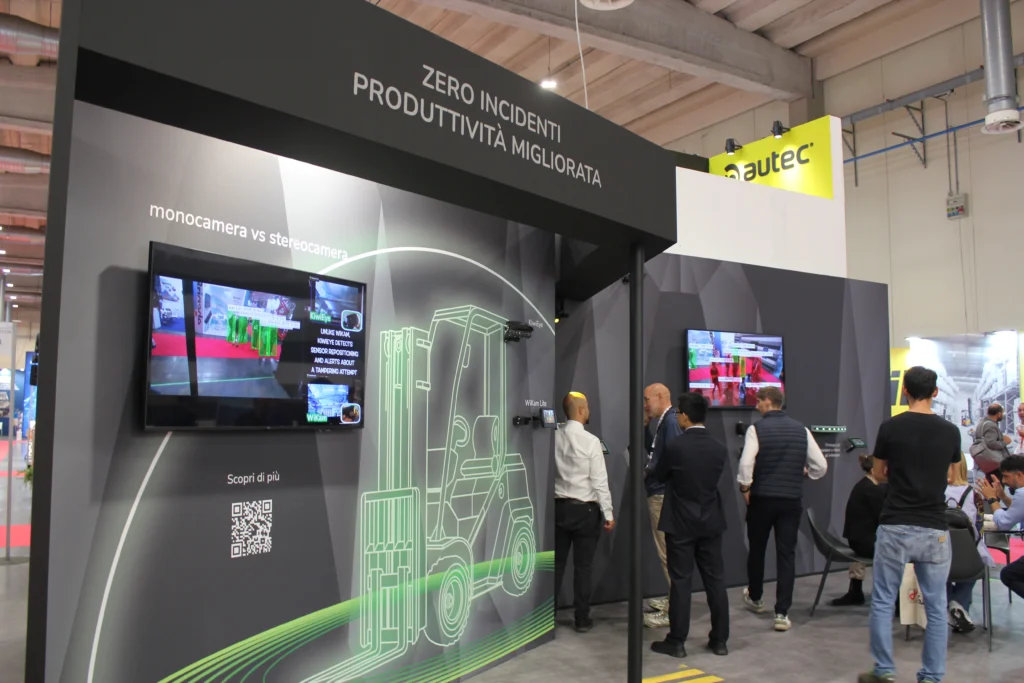
And we couldn’t do a roundup of the trends from GIS 2025 without mentioning AI, particularly in safety and proximity detection systems. DIECI, for example, showcased its PEGASUS 70.35 rotating telehandler with D+VISION, which uses AI for 360° obstacle detection. Meanwhile, component suppliers Kiwitron introduced KiwiEye, an AI-powered tagless pedestrian recognition system, and Brigade Electronics highlighted its AI-enabled camera monitor. The goal is to distinguish between a person and a static object, drastically reducing false alerts and addressing ‘alarm fatigue’ for safer and more efficient operations.
This use of AI can offer tangible benefits for equipment operators and businesses. However, the generative AI boom over the last three years has created a gold rush mentality, where every company feels pressure to demonstrate an AI strategy, leading to the rise of ‘AI washing’ – the equivalent of greenwashing, where products are marketed as ‘AI-powered’, exaggerating or misusing the term to sell standard automation. In an industry built on precision and trust, that’s a dangerous path.
Equally important, operators themselves can be sceptical or anxious about AI. They may see smarter machines as a threat to their expertise or job security or worry that AI could override their judgment, making them passive monitors rather than experienced professionals. There’s also the fear of unreliability. AI systems may work in controlled tests, but operators ask: will it perform on a muddy, foggy, or frozen site? Furthermore, when AI also monitors operator behaviour, the line between safety tool and ‘Big Brother’ blurs, creating concern about privacy and judgement.
For industrial marketers and communicators, the challenge is to turn these potential barriers into a story of reassurance and value. Successful messaging should:
• Be specific – Explain exactly what the AI does and the measurable benefit it provides. Avoid vague claims.
• Use the ‘Co-Pilot’ metaphor – Frame AI as a support tool that enhances operator skill, not replaces it.
• Keep humans in control – Emphasise that human judgment remains the final authority.
• Be transparent about data – Clarify how data is collected, used, and protected to counter privacy concerns.
In practice, this could mean leading with the problem the AI solves, not the technology itself. For example, instead of saying, ‘Our camera has AI’, a brand might frame it as ‘our system eliminates alarm fatigue by alerting operators only to real hazards’. The story becomes one of safety, efficiency, and reliability — benefits that resonate with both operators and decision-makers.
Trust is the new differentiator
Leaving GIS, we felt that the biggest challenge for industrial brands in 2025 and going into 2026 isn’t electrification, telematics, or AI — it’s trust.
With so much change in technology, regulation, and economics, customers crave stability and reassurance. The most successful communications strategies will come from teams that can unite their own engineers, salespeople and leaders behind a single, honest story — one that helps customers navigate uncertainty with confidence.
That’s the role of modern industrial PR: not just amplifying innovation, but interpreting it, simplifying it, and communicating it in a way that builds long-term trust between brand and customer.
If you’re preparing your communications strategy for the next major industry event — such as CONEXPO 2026 — and want to make sure your story cuts through the noise, talk to our team. As a specialist industrial PR agency, we help equipment brands turn complex innovation into messages that build lasting trust. Contact us to start the conversation.

Hannah Kitchener
Associate Director
About the author
Hannah is an associate director in the UK, leading strategic campaigns for industrial clients across the EMEA region. A professionally qualified journalist (NCTJ), she combines specialist sectoral knowledge in construction, energy, and materials handling with a strong network of trade media contacts to secure valuable coverage. Her expertise in inter-cultural communication, honed by degrees in modern languages and translation, is key to executing campaigns that succeed across diverse European markets.