The uproar over an AI-generated model in a Guess ad is about more than beauty standards. It was a visceral reaction to perceived deception and the replacement of human creativity with synthetic imagery, eroding the trust between a brand and its audience. For industrial businesses, it provides a timely lesson in balancing the powerful efficiency of AI with the irreplaceable value of authenticity.
It’s not often a story from the pages of Vogue makes me reflect on industrial marketing and communication strategy, but that’s exactly what happened when I read about the Guess ad featuring an AI-generated model. The debate it sparked perfectly illustrates both the potential and pitfalls of AI-generated imagery in a commercial context. Of course, I don’t know how long it took or cost to generate the final image used in the ad but may likely have saved a lot compared to a typical on-location photoshoot.
The global marketer’s dilemma
As an agency that supports clients globally, we’re constantly navigating the challenge of maintaining brand consistency internationally, while demonstrating local relevance. For years, this has created a practical hurdle, specifically regarding product images. For example, how do you get photos of a wheel loader working in a quarry in South Africa, a dairy farm in Switzerland, on road construction in the UAE without an astronomical budget?
AI presents a tantalising solution. Could we take one high-quality product shot and swap in different backgrounds to create a library of relevant, localised images at scale?
A spectrum of authenticity
The answer is a nuanced one and lies in understanding a ‘spectrum of authenticity’. This ranges from fully AI-generated content (created from a text prompt) to AI-assisted images (a real photo edited with AI tools) and the key consideration is not just where an image will be used, but what level of truth the audience expects in that context.
For marketing materials — website specs pages, brochures, and sales presentations — the goal has always been to present a clean, aspirational image, showcasing the product in its ideal state to educate an audience on what it can do. This has traditionally involved various degrees of retouching – a practice that has long walked the fine ethical line between enhancement and deception in the fashion and beauty industries.
While a wheel loader is a world away from a fashion model, the same principle applies. Using AI to place it against a generic, South African-looking quarry backdrop is one thing; editing it into a photo of a famous construction project where it has never worked crosses into deception.
This makes transparency crucial. Backgrounds should remain generic enough not to make a false claim and the use of AI should be clearly labelled. And it isn’t just good practice; it’s becoming law. The EU’s AI Act, for instance, mandates clear disclosure of content that could mislead a viewer. Adopting this transparency as a global best practice will be crucial for maintaining trust as well as ensuring compliance.
The currency of credibility
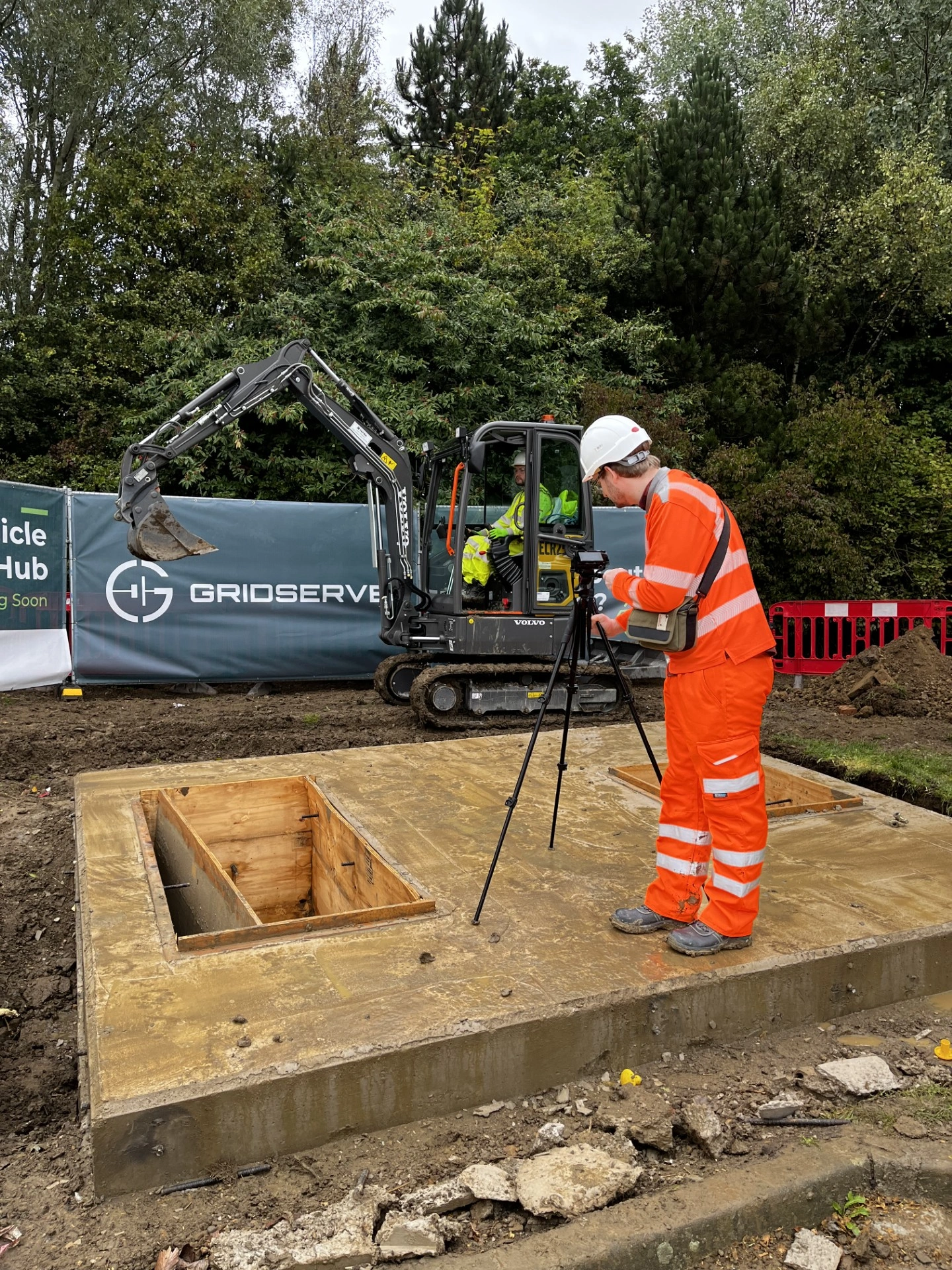
At the other end of the authenticity spectrum, however, is our media relations work: press releases, case studies, and interview pitches. AI-assisted images absolutely wouldn’t work in this context and could even be reputationally damaging. Editors have long been telling us that some of our clients’ real product images are already too perfect for their purposes, and I’ve been on jobsites where a proud owner has spent hours cleaning every speck of dirt off their machine before the photoshoot.
But a bit of mud is authentic. Just as Vogue readers want to see models with quirks who look like real people, trade magazine editors want to see real equipment on real jobsites, doing real work. This authenticity builds credibility not just with editors, but with the end-user community itself. Contractors and operators are a discerning group; they can spot an overly sanitised or fake image instantly. For them, real photos are a form of peer-to-peer respect. An AI-generated image simply cannot replicate the story told by a dusty machine and a proud operator at the end of a long shift.
An intelligent future, guided by integrity
So, the future is unlikely to be a choice between AI and reality, but rather a practice of using both with intelligence and integrity. It also requires acknowledging the human role in the process. AI is not an autonomous creator; it is a tool that still requires human strategy, creative refinement, and judgements on ethics and reputation to ensure the final output aligns perfectly with a brand’s voice and values.
On your website’s product page, your audience will expect to see the aspirational view of your product, and here, AI-assisted visuals can be an effective tool to explore as long as they are clearly disclosed and do not mislead. Meanwhile, when pitching a story to a journalist or sharing a customer success story on social media, authenticity is the currency, where gritty photos from real operations become a powerful asset. As AI tools increasingly become part and parcel of marketing workflows, mastering the partnership between machine efficiency and human integrity will be the mark of an innovative and trusted brand.
Navigating the frontier between AI efficiency and the authentic storytelling your customers trust can be complex. If you’re ready to build a global communication strategy that is both innovative and credible, contact us. Let’s talk about the future of your brand.

Hannah Kitchener
Associate Director
About the author
Hannah is an associate director in the UK, leading strategic campaigns for industrial clients across the EMEA region. A professionally qualified journalist (NCTJ), she combines specialist sectoral knowledge in construction, energy, and materials handling with a strong network of trade media contacts to secure valuable coverage. Her expertise in inter-cultural communication, honed by degrees in modern languages and translation, is key to executing campaigns that succeed across diverse European markets.