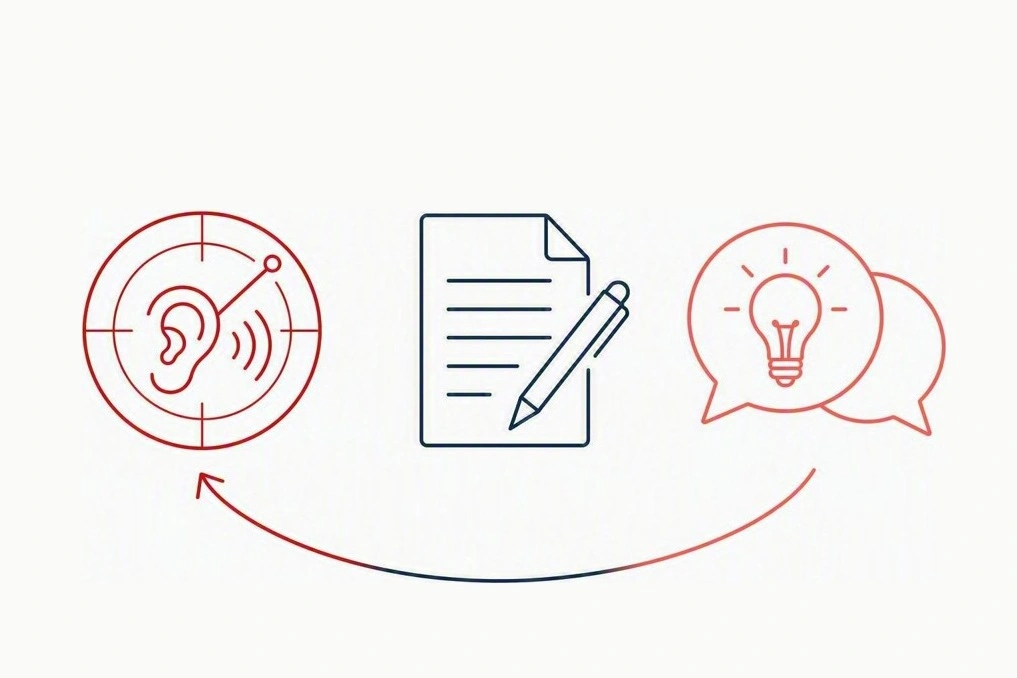
Podcasts offer an ideal format for exploring complex topics, such as those in the industrial B2B world, but the idea of creating a show can feel intimidating. Let us take you through the process, from planning to promotion, focusing on strategy over studio polish.
The opposite of fleeting digital updates, podcasts offer the space for the kind of nuanced, thoughtful exploration that helps audiences understand complex issues more deeply than any other medium. That makes them a highly appealing format for industrial B2B marketers or communicators, but where do you even begin?
The good news is that the reality is much simpler than you might expect. Here are 10 tips for launching an industrial podcast, based on our experience helping clients find their voice.
Phase 1: The strategic foundation
1. Start with strategy, not technology.
Before you even think about microphones, think about your mission. A clear strategy is what will sustain your podcast. Start by defining your purpose:
• Who is your audience? (e.g. potential customers, current employees, future talent?)
• What is your theme? (e.g. The future of sustainable manufacturing?)
• What is your business objective? (e.g. increase understanding of a new technology, build your employer brand?)
2. Give it a memorable name and identity
Your podcast’s title and cover art are its shop window. The name should be clear, memorable, and reflect your theme. Professional, on-brand cover art is essential for making a good first impression in a crowded podcast directory.
Phase 2: The human element
3. Find a consistent host.
A recurring host is the anchor of your show, building familiarity and rapport. You don’t need a professional presenter. Often, a member of your marketing or communications team – or your agency partner – has the right skills: someone who is naturally curious, a good listener, and can make even the most nervous expert feel comfortable.
4. Look beyond the C-suite for your guests.
While it can be tempting to only feature senior leaders, some of the most compelling conversations come from people at the coalface of the business. An experienced technician, a project manager fresh from a challenging jobsite, or a junior engineer often have the most authentic and relatable stories to tell.
5. Invite outside voices to add value.
Once your podcast is established, a great way to build credibility is to invite external experts. This could be a valued customer sharing their success story, a key supplier discussing innovation, or even a respected trade journalist discussing industry trends. This can also help with cross-promotion if you’re looking to target an external audience.
Phase 3: The production plan
6. Keep the technology and production simple.
Clear audio is non-negotiable, but it doesn’t require a studio. High-quality USB microphones and a quiet room are often enough, and many podcasts are recorded using Microsoft Teams or Zoom. Our in-house creative team can handle the essential editing for you – balancing audio levels and adding a professionally produced intro and outro.
7. Plan in a series and keep it concise.
Consistency is vital for building a listenership. We recommend a ‘series’ or ‘season’ approach: plan at least six episodes in advance. For a B2B audience, 15-20 minutes is a perfect starting point – long enough for a substantive conversation but short enough to hold a busy person’s attention.
8. Prepare your guests for success and embrace authenticity.
Brief your guests just as you would for a media interview, providing them with key topics and questions beforehand. While parts can be scripted, the best moments will come from the natural, unscripted conversation in between. It can be tempting to explore AI tools to generate or even voice your podcast, but as we explored in a previous blog post, audiences are unforgiving of being misled. The subtle imperfections of a real human conversation are what build genuine, lasting trust.
Phase 4: Distribution and amplification
9. Make it easy for your audience to listen.
Choose a platform that is convenient for your listeners. For an external audience, use a podcast hosting service that distributes your show to all the major directories like Spotify and Apple Podcasts. For an internal podcast, use a secure channel like a private feed or simply embed the audio player on your company’s intranet.
10. Plan the promotion from the start.
The job isn’t done when the episode is published. The real ROI comes from atomising the content. A single 20-minute podcast recording is a ‘content atom’ that can be split into a mini campaign: short video clips for social, a full transcript for your website (great for GEO), and pull quotes for graphics.
The most important step is simply to begin. By focusing on a clear strategy and authentic conversations, you can create a valuable asset for your brand.
If you’d like to discuss how a podcast could help you share your company’s expertise and build authority and authenticity, let’s start a conversation.

Hannah Kitchener
Associate Director
About the author
Hannah is an associate director in the UK, leading strategic campaigns for industrial clients across the EMEA region. A professionally qualified journalist (NCTJ), she combines specialist sectoral knowledge in construction, energy, and materials handling with a strong network of trade media contacts to secure valuable coverage. Her expertise in inter-cultural communication, honed by degrees in modern languages and translation, is key to executing campaigns that succeed across diverse European markets.