Key takeaways
• LinkedIn is entering a “steroid era” of AI-generated content, making it harder for genuine voices to cut through the noise.
• Despite the “cringe”, it remains the world’s most stable professional database and allow-risk, high-reward marking channel.
• Avoid AI-bot tropes. Use LinkedIn to humanize your brand, drive traffic to owned content, and maintain competitive visibility.
• Don’t abandon the platform; just commit to being more human than your competition.
I’ve long called LinkedIn the “Thought Leadership Olympics.”
Now I think we’re in the steroid era.
LinkedIn has always had a self-congratulatory, humble-brag quality to it. Nature of the beast. It was a place where people shared professional wins, polished up business lessons, and occasionally turned ordinary workplace observations into something much more dramatic than they needed to be.
“What breaking my leg skateboarding taught me about leadership!”
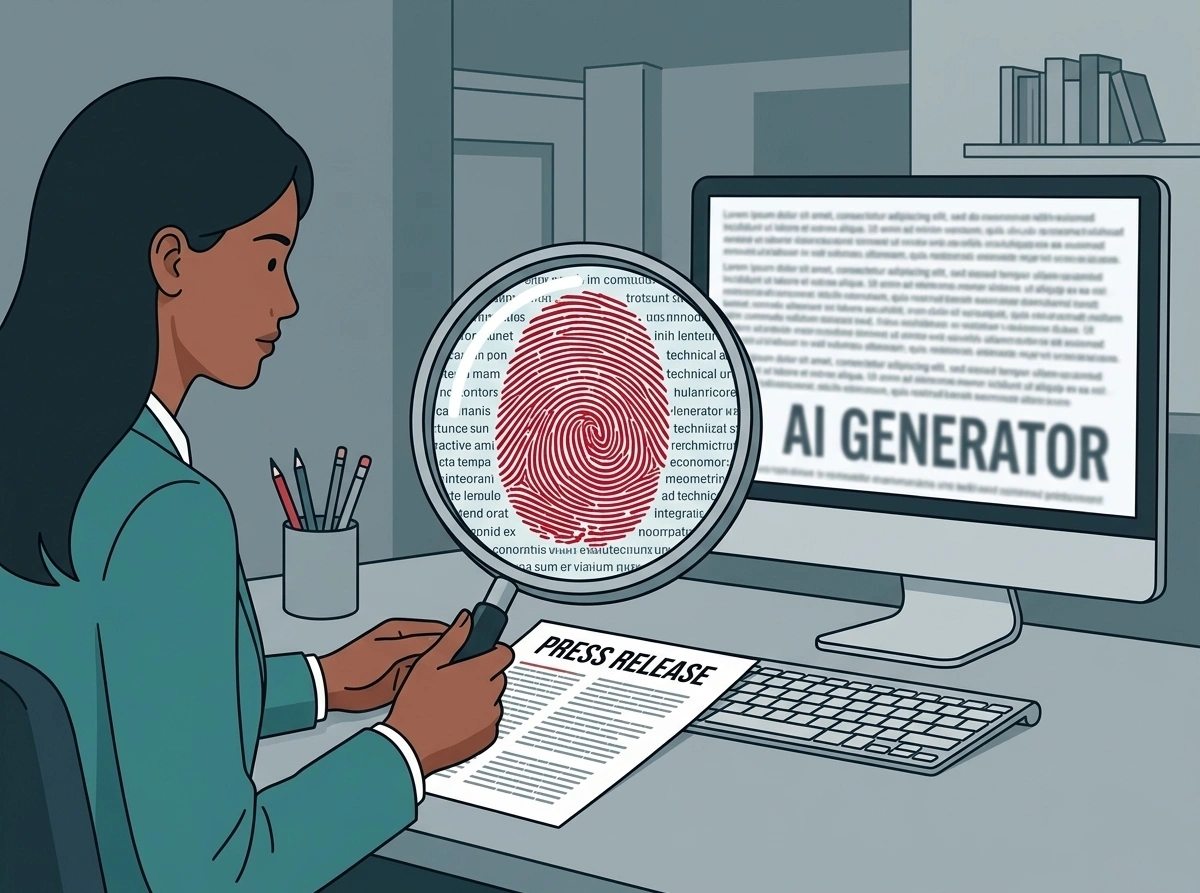
But now the platform is completely filled with AI-written posts. They are so obviously AI-generated that they have spawned a whole LinkedIn AI language unto itself …
• The “it’s not this — it’s that” style of writing.
• The tidy three-line paragraphs
• The emoji’s mid-thought
• The musings on the headline of the day
• Executive and recruiter crashouts
It has become complete cringe.
Ever heard of The Dead Internet Theory? Broadly, it means that the internet is increasingly becoming automated, fake, shaped by algorithms, and is mostly AI bots talking to each other.
And while LinkedIn is not literally dead, there are moments when it feels less like a community of real professionals talking to each other and more like a media site full of people, brands, and bots performing professionalism for an algorithm.
There are some stats to back this up. One recent Originality.ai analysis of 3,368 long-form LinkedIn posts from 99 influential profiles found that more than 50% were likely AI-generated. I’d be careful with any AI-detection number, because the tools are imperfect, but the broader point tracks with what many people are already seeing in their feeds — more of the same.
So is there any value left in LinkedIn? Is there any real community left? Well, yes.
For individuals
LinkedIn is still a great place to keep track of colleagues and grow your network. People change jobs. Companies reorganize. Email addresses disappear. LinkedIn still functions as a professional record of who is where, what they do and how to reach them. It’s more permanent than a work email and better organized than an Apple Note.
It is also a useful research tool. It is a great place to see who is working where. Great for posting job openings and receiving applications. It is a place to view people’s resumes, work histories and professional connections.
For companies
The situation is a little more complicated for businesses. Should you be on LinkedIn? Do you need followers? Do you need to post?
Firstly, yes, you should take any form of advertising you can get — especially when it is relatively low risk. LinkedIn can be time-consuming, but it is not massively expensive compared with many other marketing channels.
It can point people back to your website. It can support your blogs. It can show the faces behind the company and help create a human connection. Your posts may show up in AI search results.
And there is also the competitive question. What if all your competitors are on LinkedIn and you are not? Do you risk looking irrelevant? Do you risk looking like you do not exist? If you are a newer company, how will people ever hear about you if you do not start somewhere?
That does not mean every company needs to post constantly. It does not mean every executive needs to become a LinkedIn influencer. It does not mean brands should chase the same empty thought leadership tropes that are already making the platform feel worse.
What to do
There is a difference between using LinkedIn strategically and abandoning it completely. LinkedIn may not be perfect, but it still gives companies a place to share news, promote expertise, support recruitment, show employee voices, drive traffic to owned content, stay visible in front of customers and prospects, and give people a sense that the business is active and engaged.
So yes, LinkedIn still has some value. The key is to avoid becoming part of the problem.
It is not totally filled with AI bots — yet.

Damian Joseph
Vice President
About the author