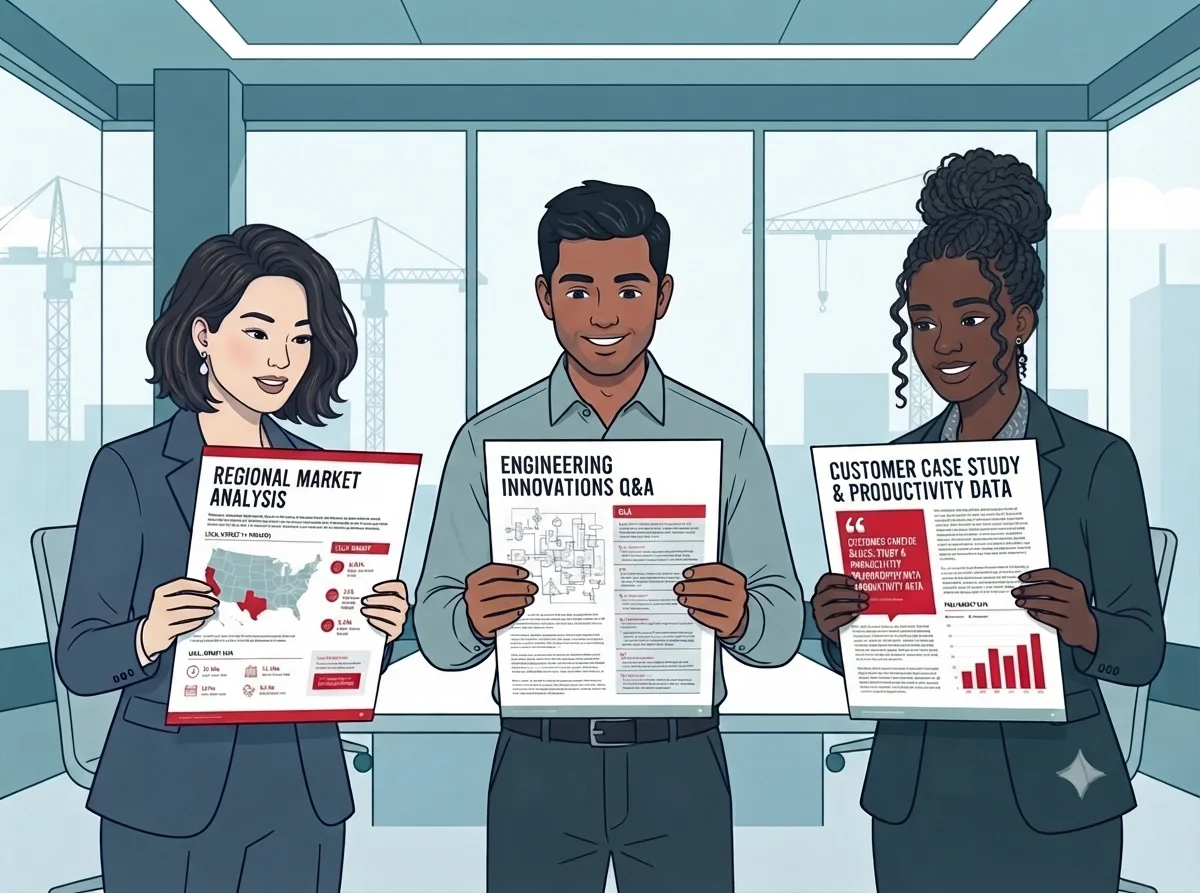
Understanding how communication works in North America is key for industrial brands looking to succeed in this fast-paced, results-driven market. From direct messaging to data-led storytelling, adapting your approach can make the difference between being heard and being overlooked.
A few years ago, I met a German PR colleague in Chicago who was supporting a client at a trade show. With a hint of indignation, he told me about an email he had just received from an American counterpart — one he found “too friendly.”
“He started by saying ‘hi’ and used my first name, as if we already knew each other,” he said. “It felt so odd.”
I couldn’t help but smile. It took me back to my time in Germany, where formality in communication is not just appreciated — it’s expected. Using the correct pronouns and some level of formality is a rule and getting it wrong can easily lead to misunderstandings or even a loss of credibility.
Expanding into North America presents significant opportunities for industrial and B2B brands. It is a dynamic market with strong purchasing power, offering companies a strategic opportunity to future-proof their business against regional stagnation and global supply chain disruptions. However, success in this market requires more than just a good product. Establishing effective communication is crucial, as North American audiences value trust, authenticity, and directness.
For companies used to operating in Europe or Asia, these differences may initially feel unfamiliar, just as it did to my colleague. Yet tone of voice and storytelling frameworks play an important role in how products and messages resonate with audiences in the U.S. and Canada, shaped by a distinct cultural and commercial mindset.
With teams across the UK, Asia, and North America, we help global brands navigate these nuances and adapt their messaging to connect more effectively with local audiences.
Direct, clear and outcome-driven
As someone raised in Latin America, one thing that definitely stood out to me when I moved to the U.S. was how direct and efficient communication is expected to be. Journalists, customers and stakeholders value immediate clarity and simplicity. That said, an email that starts with a first name and a simple “hi” is far more likely to resonate than a formal “Dear Sir or Madam”.
But it’s not just about how you communicate; it’s also about what you say. While Europe often leans toward methodical communication, and Asia toward relationship-driven, indirect approaches, North American communication prioritizes getting straight to the point. This reflects journalistic storytelling: news stories are expected to answer the key questions — what, why, when, who and how — right from the start. In today’s fast-paced, content-saturated environment, this approach is more relevant than ever.
For industrial brands, this means:
• Leading with the key message rather than building up to it
• Avoiding overly formal or complex language
• Clearly stating the benefit or outcome early in the conversation
Messaging that resonates
In North America, messaging that focuses solely on engineering excellence or collective success is not enough. Audiences are primarily interested in measurable impact. The key question is simple: What’s in it for me?
Customers want data: efficiency gains, return on investment, energy savings, and other tangible results. It’s crucial to translate technical features into real-world value. For example, what does a 10% efficiency gain actually mean in terms of operational costs savings? Individual success stories are particularly powerful in this context. Highlighting a specific customer or decision-maker and their struggles and successes helps humanize the message and makes the benefits more relatable and credible.
The power of a good story
In North America, the strength of your story often matters more than the strength of your relationship with journalists. Media professionals in trade and top tier publications are inundated with pitches. The ones that stand out are clear, concise, and genuinely newsworthy. Lengthy introductions, vague messaging, or a lack of supporting assets can quickly diminish interest. To succeed, brands should deliver compelling, direct pitches, include relevant data, visuals, and expert voices upfront, and focus on what makes the story valuable.
Offering exclusives to key publications can also be an effective way to secure high-impact coverage, which is something commonly expected in the North American media landscape.
Confidence and forward-thinking
Tone is another area where subtle differences can have a big impact. In North America, confident and optimistic messaging is expected. What might be seen as careful and thoughtful in parts of Europe can be interpreted here as a lack of conviction.
Brands should aim to use strong, active language that conveys leadership and innovation while framing their messaging around future impact and industry progress.
And here we’re not talking about exaggeration or unrealistic claims. It’s about communicating with confidence in the value your product or solution delivers.
In a nutshell
In a region where speed, clarity, and data-driven results are highly valued, having an excellent product is not enough. Missteps such as overly complex messaging, excessive focus on minor technical details, or a lack of confidence can limit your impact.
Keep your communication concise, clear, and relevant, and use these cultural nuances as a competitive advantage.
SE10’s approach: Local insight, global consistency
When working globally, effective communication is never one-size-fits-all.
At SE10, we apply consistent global principles — clear storytelling, human-centric content, and strategic messaging — while adapting our approach to align with local expectations and cultural nuances.
Understanding communication differences is what makes a difference in unlocking new opportunities for growth and connection.

Account Director
About the author:
Mariana Santos is an Account Director at SE10. She handles PR for some clients in the packaging industry writing press releases, thought leadership pieces, managing social media, supporting event setup. Before joining SE10 in 2016, she had worked as journalist for 15 years in Brazil, Germany and the U.S.